
The United Nations General Assembly proclaimed 2 November as the ‘International Day to End Impunity for Crimes against Journalists’ in General Assembly Resolution A/RES/68/163. The Resolution urges Member States to implement definite measures countering the present culture of impunity. This day is commemorated every year on 2nd November a date which coincides with the day when tow French journalists were assassinated in Mail.
countries: Uganda
GBV Training
Media Focus On Africa undertook a training on fighting Gender Based Violence (GBV) in post covid19 era. Participants were from 3 radio stations and 3 Civil Society Organisations (CSOs) and 12-15 journalists. The training was basically online using the zoom platform. We also undertook trainings for journalists on gender sensitive reporting and Trainings for journalists to produce better content on gender issues. We trained local Civil Society Organisations (CSOs) representatives on how to use media to raise awareness on Gender Based Violence (GBV)
The Tulonde App

This app is a gateway to the general Ugandan election in 2021. Read more about the presidential candidates, explore their manifestos and make up your own opinion about them.
This app is the result of a collaboration between Media Focus on Africa-Uganda and Impact Unified AB.
Impact Unified does NOT represent any government entity or political party.
UGANDA MEDIA WEEK 2020

The 2020 Media Dialogues lasted a period of 7 days and included open discussions on ‘Scientific General Elections – Key issues for journalists’ followed with training sessions on: ‘Fake news and disinformation in times of elections – Fact Checking and verification’ and ‘Upholding independent journalism in scientific elections – principles of effective elections reporting’ held on Monday 7th September, 2020, in Gulu district. Over 30 participants attended.
UGANDA EDITORS DISCUSS REGULATION FOR THE MEDIA
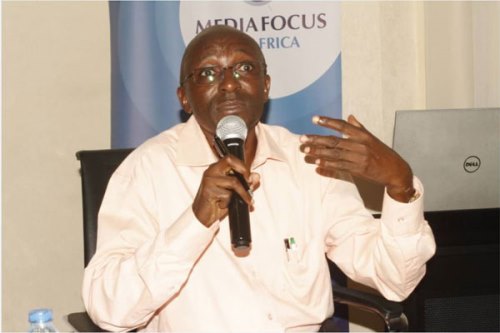
The Uganda Editors’ Guild in partnership with the Media Focus on Africa (MFA), have started discussions on key issues in the media industry, including regulation and media freedoms.
At a recent dialogue held at Golden Tulip Hotel in Kampala, the editors discussed the kind of regulation the media needs to protect itself but also in order to gain respect.
Dr Adolf Mbaine, a lecturer from the Journalism School at Makerere University pointed out that the media needs to self-organise if the industry is to present a credible case for self-regulation.
While presenting a key note address under the topic “Creating Mechanisms towards Self-Regulation”, Dr Mbaine, presented the different options for regulation including — statutory, self and co-regulation. He also expounded on the concept of self-regulation, a popular subject in the media industry circles in Uganda, pointing out its ….. Read The Whole Story Here
This article has been featured in several platforms.Read all of them below.
FAKE NEWS: A SPOT OF BOTHER IN JOURNALISM
KAMPALA – When celebrated Ugandan entertainer Anne Kansiime last month woke up from a siesta to find more than 150 missed calls on her phone, she immediately knew something was amiss. The comedienne, actress and TV host would soon find out that during her brief shuteye, news had spread that she had drowned together with her boyfriend in Canada.
“I am alive, I am well, I am in love, I am so happy. And for all the ninjas that love celebrating my life, you knew where I was because you follow me,” a characteristically beaming Kansiime dismissed the claims in a short selfie video.
In the five-minute footage posted on her YouTube page, the self-styled ‘Queen Ninja’ was also keen to offer a dollop of advice to her social media followers in the hope that they do not fall into the jaws of such misleading hoaxes.
“Please follow the right pages. I recently got a blue tick on Instagram [meaning the account is verified]. I have a blue tick on Facebook and I have one YouTube page, so no excuses.”

The Kansiime false death story is one of thousands – or even millions – other similar hoaxes that have slalomed their way into the public space all over the world. Fake news, it is. And according to veteran journalist Barbara Among, we must call a spade a spade. No sugar-coating.
“We may want to sanitize the word (‘fake’), but it is what it is: fake,” she said Thursday in Kampala during a vibrant discussion on practising journalism in times of disinformation.
“Fake news always relates to what is happening in society,” she weighed in further, underlining that this wave of and appetite for disinformation peaks towards election time, with especially politicians taking advantage of it to “influence our election narrative”.
Citizens’ Coalition for Electoral Democracy in Uganda (CCEDU) co-ordinator Crispin Kaheru shared the same sentiments.
“The political heat is already on ahead of the 2021 general elections, and along with that comes the intensity of fake news. Fake news will pick up in the coming months,” he told media practitioners and other key stakeholders during the dialogue organized by Media Focus on Africa, a non-profit organisation.
Ugandans will go to the polls in under two years from today to elect their new set of leaders. The Electoral Commission, led by Justice Simon Byabakama Mugenyi, has since launched the strategic plan and roadmap to the polls.
Meanwhile, the Commission has warned political actors against engaging in early campaigning before the nomination exercise is officially announced.

‘Invest in journalistic vigilance’
In 2013, a Global Risks Report by the World Economic Forum warned that “digital wildfires” could spread false information rapidly. The report also presented the concern that “our hyperconnected world” could facilitate the “rapid viral spread of information that is either intentionally or unintentionally misleading or provocative, with serious consequences”.
“Fake news is the new way to kill people. It is the new way to blackmail people and it a new tool to manipulate people. Politicians will use this tool,” said Kaheru, also posing a critical question: How much are media organisations investing in the fact-checking of information?
“The challenge is quite enormous, but it is very clear. As journalists, we need to invest in journalistic vigilance.”
Failure to do so leaves a trail of consequences, as UNESCO’s Daniel Kaweesi highlighted: “Fake news and untruths and everything related to it is making people suffer. These days, it is very easy to see a human being accused of stealing a chicken dead while the chicken is still alive.”
To Kaweesi, it is also a question of morals.
“A lot must be done to make sure we go back to normality. In the event of fake news, to me, journalism is under attack. We need to instill morals in our society so that they get back to telling the truth.”
During Thursday’s discussion, a couple of arguments bubbled to the fore. One participant said that journalists have sold the profession cheaply to politicians. Another observation was that race to being the first to publish is leading journalists to fall prey to disinformation.

So how are media houses battling fake news?
In his discourse, journalist Herbert Benon Oluka explained that fact-checking and social media verification is being done to counter disinformation and misinformation. It is understood that media establishments are also using investigative journalism as well as online tools to generate the right information for their audiences.
”Fake news can make a media house lose its credibility,” he warned.
If media can get their houses in order and also retain their best and most experienced journalists, it could help counter the huge wave of fake news, Oluka argued.
Seasoned journalists Carol Beyanga, Edris Kiggundu and Giles Muhame were also at the heart of the discussion, offering their experiences in the profession. It turned out that often, it is a double-edged sword.
As a consequence of disinformation, “we have had to restrain ourselves in order to verify information. But sometimes, we have burnt our fingers”, according to Beyanga, who is an editor at Daily Monitor. “We are more cautious when it comes to politics. We have learnt that you would rather be safe than sorry.”
It is a learning curve, explained Kiggundu, who works with online platform Nile Post.
“We have been victims of fake news. We have been fooled before. Because of fake news, you become cautious,” he said, pointing out that traditional print media have the edge over online platforms because of the various layers of editing their content goes through before publication.

On his part, ChimpReports’ managing editor Muhame encouraged fellow journalists to get better acquainted with the subjects they cover. “Sometimes, you run fake news out of ignorance. We need to expand the horizons of our knowledge.”
He also voiced the need for media houses to think about diversification in order to steer away from advertising as a chief source of revenue. “Personally, I think the biggest threat to media independence are the advertisers. Sometimes, we are victims of blackmail.”
And if you thought fake news is packing up, think again.
“Fake news is not about to go away,” warned Pius Mwinganisa, the Media Council secretary, who called for a change of attitudes among journalists. He argued that information should also be better managed, organized and archived.
Mwinganisa, who also works in the ICT ministry, also called for the registration of online media publications as well as for more training of practitioners.
“Self-regulation is important.”
Media Focus on Africa will facilitate the Uganda Media Week 2019, which is due later this year. The event will bring together different stakeholders to deliberate on the various challenges facing the media today.
In the buildup to that important week, Media Focus on Africa is hosting a series of dialogues on key topical issues. The idea is that the the discussions will put the challenges into context, discuss the various issues that arise and seek workable solutions to address them.


WHAT OTHERS SAID
Dr. Emily Maractho — Uganda Christian University:
Fake news is not exactly new. It is the way we are using it that makes it appear new. I would like to view fake news as intentional.
There is a very big decline in the trust of the elite. Somehow, it is like the elite are driving their own agenda. There is increasing pressure on fact-based media. Fake news creates a lot of confusion. There is distrust of news as a subject.
We need to rethink the role of media. Journalists need to go beyond the traditional roles of the media (informing, educating and entertaining) and put into context the news or information they generate.
Abbas Mpindi — Media Challenge Initiative:
For the first time ever, journalists have begun to matter. Fake news is a wakeup call to promote transparency among journalists.
Young people are the most affected by fake news and propaganda. In most cases, young people focus on the content and not the source. This calls for empowerment of this group through media literacy campaigns.

UGANDA MEDIA WEEK 2019
Media Focus on Africa (MFA), with support from Konrad-Adenauer-Stiftung, held a breakfast session of the Pre-Media Week Dialogues under the theme ‘Creating Mechanisms towards Self Regulation,’ which took place at Golden Tulip, Kampala. The media dialogue that was held in partnership with the Uganda Editors’ Guild, one of a series building up to Uganda Media Week that will take place later in the year.
UGANDA MEDIA ROUND-TABLES

Round table discussion that will discuss issues about safety for journalists’ online, offline and at their workplaces and find ways of addressing the existing challenges. This is part of an ongoing project to ensure that clear mechanisms are put in place for safety for journalist especially female journalists across the country.
What are the Media Roundtables about?
Media roundtables are open discussions about safety for female journalists between media managers, editors, reporters and security officials.Conducted by Media Focus on Africa in partnership with UMWA, media roundtables are intended to identify key issues about safety and come up with practical solutions that can be implemented immediately to minimize threats that female journalists are exposed to as they go about with their professional duties. With information generated from the media round tables, UMWA and Media Focus on Africa Uganda will support state officials, other actors and media to promote safety for female journalists in Uganda
Context
While safety for all journalists is an issue of concern, UNESCO has recently reported a rise in deaths of female journalists while on duty. Locally female journalists attest to various challenges that put them at risk online and offline including cyber bullying, hacking, sexual harassment and brutality by security organs. Therefore there is need for a concerted effort to engage different stakeholders to identify the key issues and agree on workable solutions to address them. Results from a situation analysis on the safety for female journalists done by UMWA in partnership with Media Focus on Africa will form a basis for this discussion as we seek to find a realistic solution to the safety challenges that are uniquely faced by women journalists.
What next?
More awareness about the issues and commitment to address them for example in-house policy to ensure female journalists work in a favourable and secure environment.
YOUTH TRAINED IN MULTI-MEDIA STORY TELLING
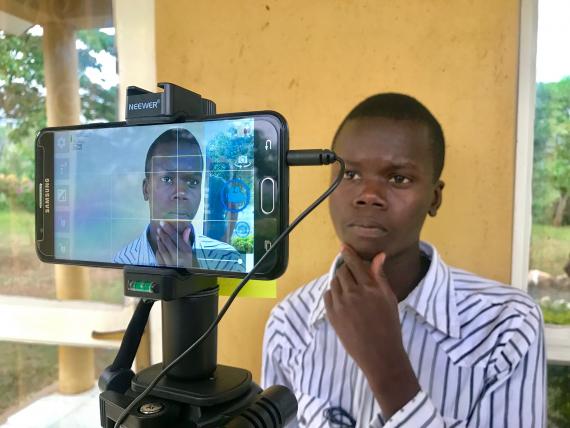
20 youths from Imvepi refugee settlement, in West Nile region of Uganda, have taken part in the first training session of a seven day capacity building workshop in film production, implemented by Impact Unified in partnership with Media Focus on Africa (MFA) Uganda.
The youths took to the training with excitement with it being the first of its kind they have had the opportunity to participate in. “I have watched films before but did not know how they were made. Now I am glad I have the opportunity to learn how to make films,’’ said Brenda Alia, a student from Imvepi Secondary School. The students were introduced to the basics of script writing, editing, taught about media and different platforms through which to communicate films. “A good film is like a well cooked meal where you have all the ingredients properly put together,” said Neil Bell, a film producer/director from Impact Unified, while teaching the youths about the basics of film editing.
During the training, the youths were challenged to come up with narratives of their own, which they will have to develop into short one-minute films in the course of the seven day training period. Amongst the resources given to the youths to help with their learning and also produce their own films, are Ipad configured with video editing software. With these, the youths can record and edit video and audio footage. These Ipads, among other resources, will be left available to the youths even after the project is over, such that they can carry on producing films to express themselves and tell their stories to the world.
This capacity building is the major component of Project One-minute that aims at empowering youths in refugee settlements with skills and knowledge in film production, media and communication. Project One-minute is funded by Creative-Force-Swedish Institute, a Swedish agency engaging other countries in information, culture, public life among others, and the Swedish International Development Cooperation Agency working on behalf of the Swedish parliament and government to reduce poverty in the world. Project One-minute is facilitated by UNHCR, the UN Refugee Agency.
ONE MINUTE PROJECT -WESTNILE
The One-minute aimed at empowering youths in refugee settlements as well as their counterparts in the host communities with skills and knowledge in film production, media and communication. The skills will prepare refugee youths and youths in host communities to be able to tell their own stories and stand out beyond the narratives that are often presented in the media.
To enable this move, the youths were given resources to help with their learning and also produce their own films. These included Ipads configured with video editing software. With these, the youths can record and edit video and audio footage. These Ipads, among other resources, will be left available to the youths even after the project is over, such that they can carry on producing films to express themselves and tell their stories to the world.
Project One-minute is funded by Creative-Force-Swedish Institute, a Swedish agency engaging other countries in information, culture, public life among others, and the Swedish International Development Cooperation Agency working on behalf of the Swedish parliament and government to reduce poverty in the world. Project One-minute is facilitated by UNHCR, the UN Refugee Agency.