BARRIERS WOMEN FACE WHEN RUNNING FOR POLITICAL OFFICES

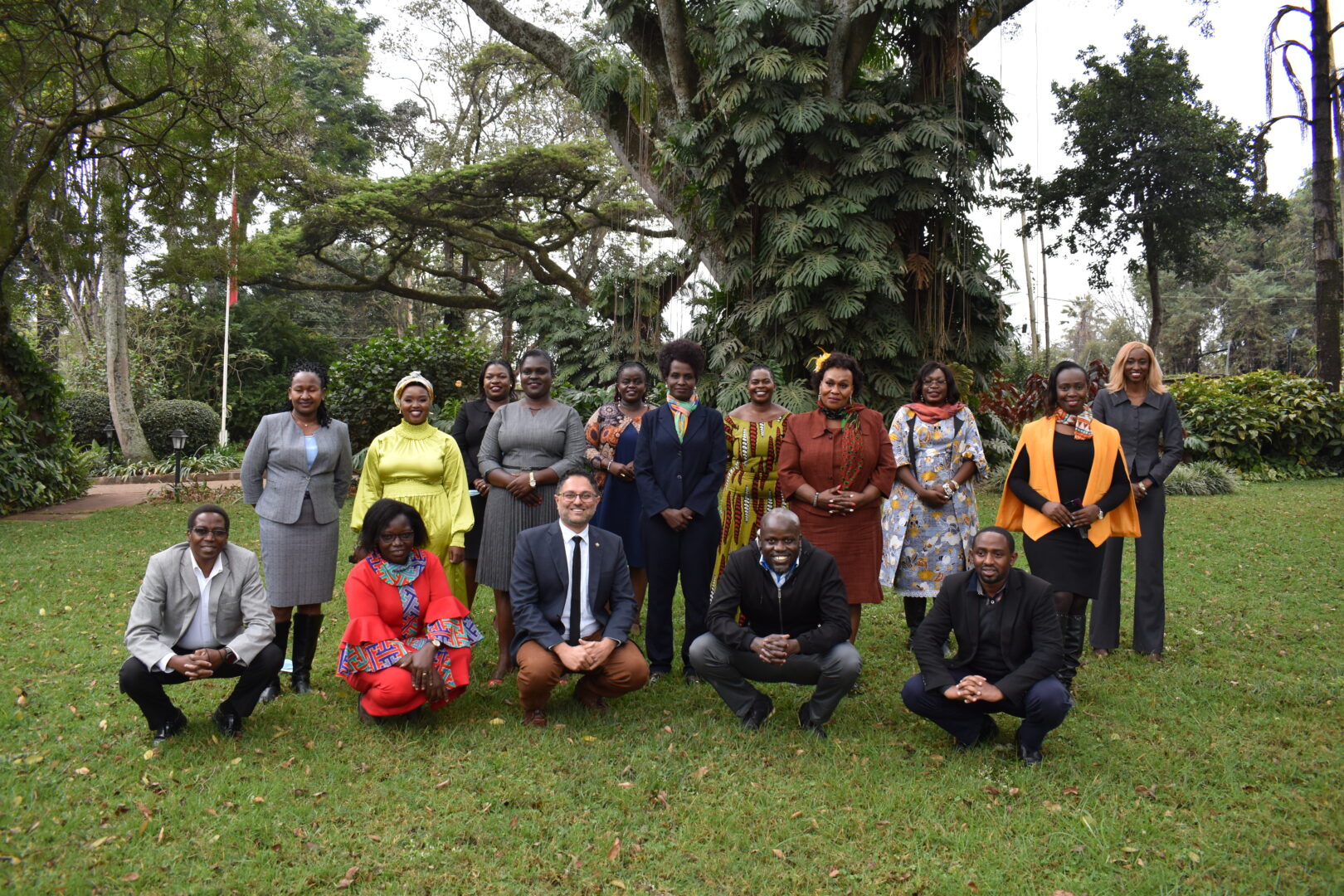
On July 29, 2021, The Canadian High Commission and Media Focus on Africa engaged in discussions with Ms President participants who will be vying for elective seats in the 2022 elections in Kenya. These discussions are part of Canada’s and MFA’s objective to promote and support women’s political participation. These discussions are going to take place over a period of months in the lead up to the elections.

In the discussions held at the High Commissioners Residence, the commission and MFA sought to understand the individual journey of the women, their experiences in their quest for leadership, the strategies they were putting in place and the barriers women face when they run for office.

Some of the conversations are captured in short video. Watch HERE

WE ARE HIRING: OFFICE ASSISTANT POSITION

Office Assistant Job Vacany.

MFA is seeking a qualified applicant to support our Kenya office. Application deadline is Friday, January 14, 2022.

Responsibilities

  1. Keeping an inventory of office supplies and ordering new materials as need arises;
  2. Running errands such as; bills payments, deliveries and collections e.t.c.
  3. Cleaning and maintenance of the office
  4. Assist in answering calls, arranging & filling documents, printing & photocopying, typing, ordering services and quotations e.t.c
  5. Prepare meeting rooms and organize for materials needed.
  6. Prepare lunch for staff members
  7. Other services mutually agreed in writing but assigned after signature of this agreement.

Qualifications and Skills

  1. A high school certificate. Any other training certificate is an added advantage.
  2. Ability to communicate in both in English and Swahili, spoken and written.
  3. Ability to use a computer.
  4. At least 1 year experience as an office assistant or in a related field.
  5. Ability to work well under limited supervision.
  6. Clean and organized.

How to Apply

Send your application (Cover Letter and CV with 3 referees) to info@mediafocusonafrica.org

Deadline: Friday, January 14, 2022

Download Pdf document with same vacancy details here.

WHY VIRAL SOCIAL MEDIA CONTENT IS BAD FOR JOURNALISM

Opinion: Who these days doesn’t have guilty pleasures such as watching endless videos online when you are supposed to be sleeping or working?

My favourite are cat videos, babies, pets, and animals.  The creators of these videos have become the new e-entrepreneurs and social influencers.

To journalists, viral social media content continues to reshape the ways news is to be packaged.   The redefinition of what makes content engaging has put stress on news media to repackage items to fit a new type of consumption.

Journalism vs entertainment

The media has evolved at a speed that journalism is still working at catching up with. One of the conspicuous changes has been the exponential expansion for the production of online content. This has opened the playfield to an uncontrollable number of players. This content is directly competing with journalism.

While the expansion of platforms has created space for diversity, the playfield has been made grossly unlevelled. Journalism in some regions of the world has suffered a colossal slump as a result.

The cost of producing quality journalism remains considerable. Conversely, producing social media content is relatively cheaper and without the need for time-consuming gatekeeping or editorial quality checks.

Changing tastes for audiences

Social media transformed the way audiences consume content.   Online audiences developed traits such as impatience, constant use, consumption on the move, and the luxury of infinite choices.

These traits turned the audience into an insatiable beast that constantly nibbles bits of information.  In return content creators produce shorter and entertaining content.

The word ‘Viral’ was reborn.

It must be viral to show impact?

Numbers are the new definition of impact.  The drivers of impact have become quite obscure if journalism is to retain its depth and analytical values.  Viral content has proved to be driven by entertainment value, bizarre elements, scandalous nature, or emotional appeal.

It’s all about click baits.

Daily journalism may not match these standards.  It is not every good piece of journalism that will contain one or all of the qualities of viral content.

This makes the average reporter’s work remain flat amid bubbling social media viral posts that are dumbed down to attract numbers.   The ability of news and feature stories to engage is now being judged against entertainment on social media.


Additional costs for journalism

Facebook’s addition of sponsored content has made it further challenging for unpaid for news content to compete.

Legacy media may still boast of a large following on social media. This is largely inherited from their dominance in the pre-digital era.  Upcoming and alternative media still find it difficult to amass a following online without considerable budgets on social media advertising and branding.

Even for legacy media, social media has been an additional cost. There needs to be trained personnel, repackaging of long-form journalism to short form as well as necessary apps and software.

The cost of retraining journalists to write and produce for social media is considerable.  There has also been a shift in work culture, such as the need to use mobile phones for journalism.  All come at a cost.

Preserving long-form journalism in the digital space

The sacred space of journalism has always been under threat.  Media freedoms must be continually fought for.

While the digital space was hailed to provide a leeway for alternative voices which would have been an addition to press freedom and freedom of information and expression, the trend is changing fast.

Digital may soon be just like mainstream. Many good pieces of journalism get drowned in the sea of ‘viral’.   The ‘viral’ virus has infected journalism and a cure is needed.

All the funny videos online are good for audiences, people need comic relief. However, the truths and perspectives that journalism offers are the lifeblood of our democracy and freedoms.

 A new social influence audit

 Journalism has to redefine its social media influence.

An audit of followers, comments, and real-life impact may give fair indicators of how a story is performing.  The metrics for other social media content should not be used to judge journalistic engagement.
CONVALESCING NEWS MEDIA CREDIBILITY DURING COVID 19 TIMES

Analysis: “Coronavirus” and “COVID19” pandemic are now key words in most of our conversations. It is almost impossible to write a news story without finding how it links to the pandemic. Business news, politics, and sports all have to be hinged on the global health crisis.

Reporter’s scripts across the globe have been synchronised into numbers of infections, deaths, and recoveries. Governments have become a key source of news and in many instances the only source. Journalists have to rely on frequent press briefing from the political leadership and their appointed bureaucrats. In Kenya as many parts of the world, the frequency of news bulletins increased as per the need of governments to release new information to the public. Social media became awash with misleading information and soon lost its glimmer as the alternative or the channel of dissent.

The complexity and uniqueness of the pandemic did not only present global health systems with shock but journalism alike was thrust into an unorthodox space for storytelling. The strict rules of lockdowns, curfews, social distancing, and disruption of public transportation isolated news sources from the reach of journalists. Frontline medical workers, convalescents, and quarantined people could have been alternative and additional sources. However, the public health guidelines in place delayed a reach to these sources and some instances cut them out completely from being part of the story.

At the same time, many newsrooms adopted working from home while only skeleton staff went to work physically. The demand for information on COVID- 19 meant little time to do in-depth journalism. Scientific knowledge of the virus has not been within quick access due to the novel nature of the disease. This further thinned out sources of information for journalists.

Government departments seemed to the last source standing. While this gave a sense of authority to the information released to the media, dissenting voices became a target. Individuals who raised contradicting views were easily branded as fake news mongers and at times met with a harsh response.

The most recent survey from Infotrack, a Kenyan research firm, revealed that news media trust came second to the government while social media dropped to the bottom with only 35% of respondents crediting the platforms’ trustworthiness.

Journalism has endured a tough terrain with eroding trust and blame for overfeeding audiences with bad news. Many may argue on the point of what makes news. Universally, bad news is news. A section of audiences got fatigued with the bleak news of the virus. News media became a victim of backlash for a population suffering from fear and anxiety over the unbearable impact the pandemic has on their lives. It is fair that at a time like this, the masses need relief from bad news, but journalism doesn’t have to be tasked with the search for solace. At the core of the craft is to hold power to account to alert audiences of any deviations from the course of the public good. Naturally, this is packaged as bad news.

Timely and truthful information from the news media is vital for triggering change. In countries where the media operates freely, journalism is often hailed for provoking change in public matters of governance and accountability. The Coronavirus continues to present our world with unrivalled obstacles. The social and economic lives of entire countries and individual citizens have been thrust into deep uncertainty. The media and journalism industry will not grope its way of out the challenge but has to take off the blindfold and fearlessly reclaim its trust and duty to the audiences.

By Frenny Jowi, Project Officer at Media Focus on Africa

KENYA MEDIA WEEK 2019

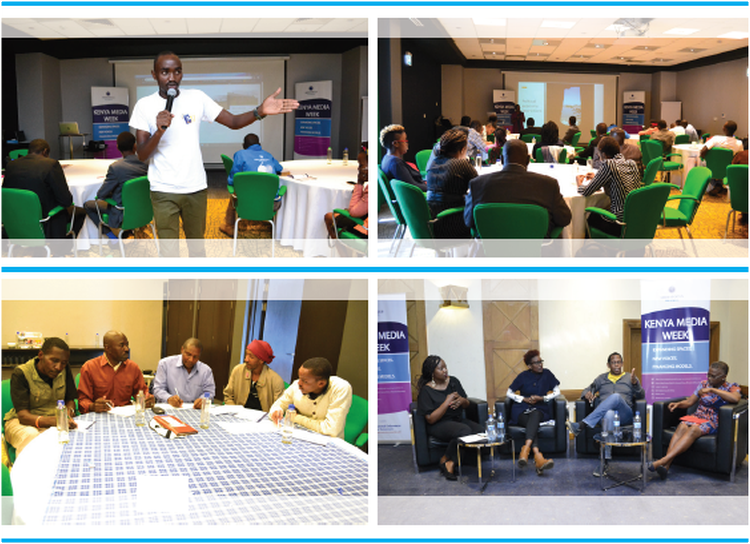
The 2019 Kenya Media Week was a follow up to the very successful 2018 Kenya Media Week. It was launched at a one-day conference in August 2019 and was subsequently held over three days in November 2019. MFA organized the conference to explore key issues facing journalism in the digital space in  Kenya today. Just like in 2018, the conference harnessed insights from academic research, the experience of journalists as well as the bold voices of audiences and citizen journalists who use digital platforms to shape Kenya’s journalism. It was designed to enable reflection and discussion around contemporary journalism. Through master classes, panel discussions, and presentations, the participants talked to one another, tried various technologies, tested new skills, and tabled ideas.

The financial survival of the journalism profession – disrupted in large part by digital technologies’ influence on practices and audience behavior – remained an important topic during the conference with the first presentation focused on non-profit journalism alternatives in the digital age. This launched a panel discussion that led to a heated debate about who should be considered a journalist.

The heat generated between self-taught and university-trained practitioners illuminated how journalism stands at the intersection of change and further, what times of transition do: they destabilise established names, definitions, skills, and practices, and present new opportunities and ethical challenges.

A detailed publication of the event and all that was discussed can be found on this website at the Resources section. Read and download here. 

MS PRESIDENT FINALISTS IN BRUSSELS

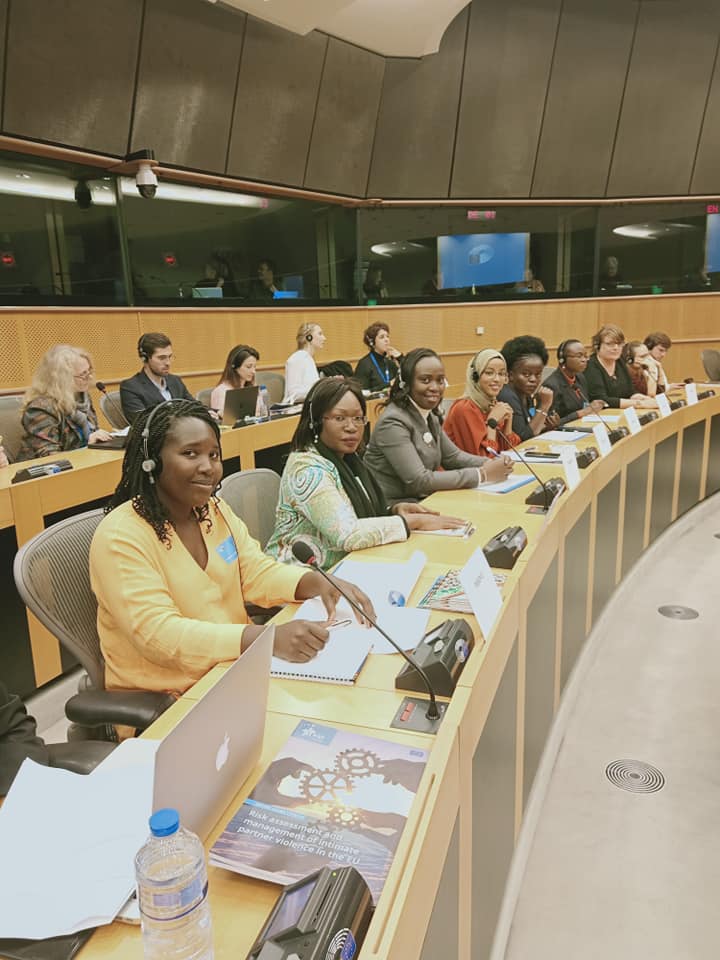
On 18-21 November 2019, Media Focus on Africa (MFA) and the five finalists of Ms President are invited to Brussels to attend a series of meetings with high representatives of the European Union. Ms President is a 26-episode TV reality show that aims to raise awareness on the role of women leadership in effective peace building and in countering violent extremism. The show featured a diverse group of 71 women who competed to become the first female President of Kenya.

Five finalists were selected for the final episodes which included a field campaign, a private meeting with the President of the Republic of Kenya, H.E Uhuru Kenyatta, a presidential live debate and a grand finale where the winner was announced. Kenyans were invited to vote for their preferred candidate through a free SMS platform. The 26 episodes aired on KTN and attracted more than 3.5 million viewers every week. Nereah Amondi Oketch was crowned first ‘’Ms President of Kenya’’. The impact of the project is already observed. Contestants have expressed an increase in their self-confidence, their power of influence at home, in their communities and on political level. It has given them a tremendous opportunity to network and promote the interest of women and girls in Kenya. Many of them have already expressed their intention to vie at the 2022 election.

The project also included capacity-building for women contestants, media practitioners and local civil-society organisations. Finally MFA and its project partner, Muslims for Human Rights (MUHURI), are currently organising 55 community dialogues in three violence-prone counties: Mombasa, Kilifi and Kwale. These dialogues will be attended by community, religious, youth and women leaders. The aim is to specifically counter violent extremism through the promotion of women leadership.

Thanks to the European Delegation to Kenya and the EU representatives in Brussels, a 4-day meeting was organised between MFA, the five finalists and EU representatives. During that week, MFA and the finalists will be engaging with Ms Hautala, Ms McGuinness, M. Fabio Massimo Castaldo – Vice-Presidents of the European Parliament, Ms. Sonya Reines-Djivanides – Executive Director of the European Peacebuilding Liaison Office, Sandra Kramer – Director DEVCO, EU relations, West and East Africa, members of the European Peace Building Office.

Finally MFA and the finalists will be meeting the High Representative of the Union for Foreign Affairs and Security Policy and Vice President of the European Commission, Ms Federica Mogherini. Through these meaningful meetings, MFA hopes to strengthen its current relationship with the European Union and to raise the voice of Kenyan women internationally.

EU head of Delegation in Kenya sent off the team to Brussels after a lengthy discussion on a way forward for increasing Women’s participation in high level decision making in government and corporations.

MFA wishes to thank its funding partners: the European Delegation to Kenya, Global Affairs Canada and Hivos.

CALL FOR REFLECTIVE ESSAYS

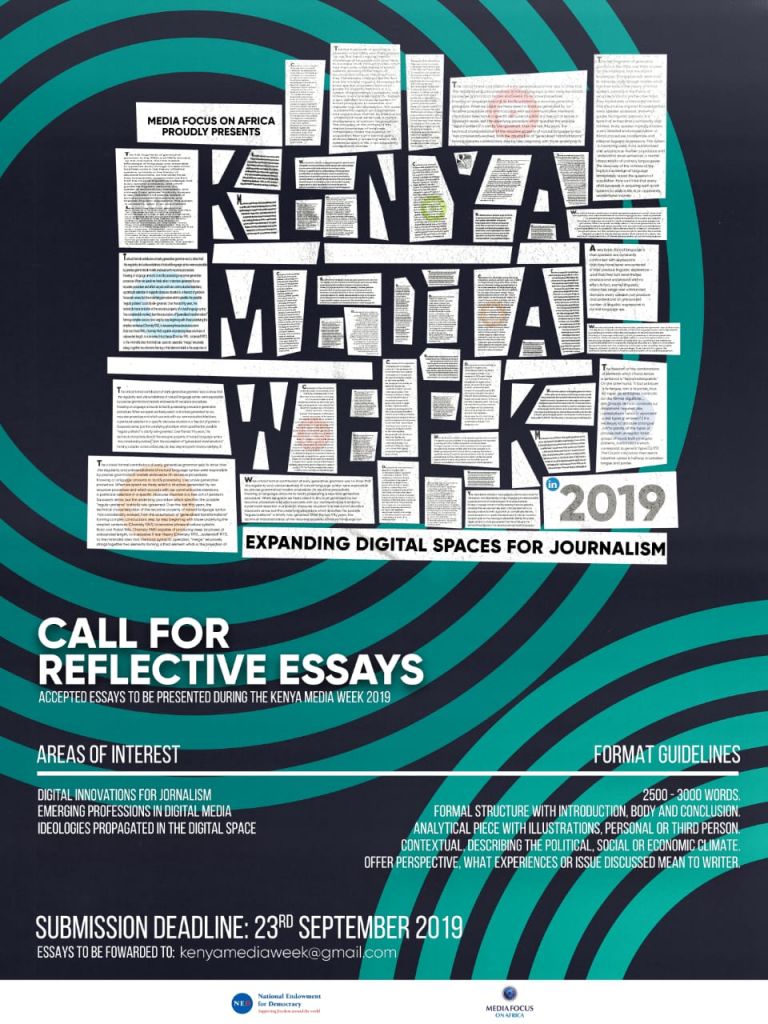
In this second edition of Kenya Media Week, we are seeking Kenyan innovative ideas for the Kenyan digital media space. The theme for the 2019 Kenya Media Week is: Expanding Digital Spaces for Journalism. 

The main question is whether non-profit digital news platforms are the alternative for in depth, authoritative, and investigative coverage of matters of great public interest in Kenya? 

Our call for Reflective Essays is an opportunity for journalists, researchers, academics and other professionals with experience and interest in journalism to explore: the emerging innovations, professional identities and ideologies on the digital space for journalism.

Your essay can focus on one of the three areas namely:

–          Digital innovations for journalism

–          Emerging professions in digital media and

–          Ideologies propagated in the digital space 

The essay format

A reflective essay is an analytical piece based on the experience(s) of the writer or of other people observed by the writer. The piece should have illustrations, but it should move beyond examples/anecdotes of experiences to also include perspective and context. The latter include a sense of what those experiences mean in relation to the subject being written about by using facts and opinions from other credible sources.

The Essay should aim to give:

– Illustration (through personal/other examples);

– Context (the political/economic/social climate in which the issue is taking place;

– Perspective (what the experiences given and the issue under discussion mean to the writer).

Each reflective piece should be between 2,500- 3,000 words long, and can be written with the format of introduction, body, and conclusion. The piece may be written in first-person or otherwise, but should not be too informal in tone and style as it will end up as a written record of the issue under discussion. Accepted reflective papers will be presented during the Kenya Media Week 2019, with presenters focusing on the context and perspective in their presentations. 

In each category every winner will receive a token of appreciation 

These essays will be presented during the Kenya Media Week to be held on November 2019

Essays to be sent to: kenyamediaweek@gmail.com

Submission deadline: September 23th 2019

WELCOME TO KENYA MEDIA WEEK 2019

NEW VOICES, EXPANDING SPACES, FUNDING POSSIBILITIES

#MEDIAMATTERSKE  #KENYAMEDIAWEEK2019

Welcome to the second edition of the Kenya Media Week.

Media Focus on Africa, Mobile Journalism Africa and the National Endowment for Democracy are delighted to bring to you this years’ edition of the Kenya Media Week conference. We continue to explore current and emerging trends in digital innovations for journalism. The conference is keen to hear from new voices in journalism. Our intention is to foster collaborations that could promote public interest journalism through digital platforms.

THE CHALLENGE

We are seeking solutions to improving and promoting public interest journalism and especially investigative journalism.The main question is: whether non-profit digital news platforms are the alternative for in depth, authoritative, and investigative coverage of matters of great public interest in Kenya?

THEMATIC AREAS

During the three days, our conversations will explore the following:

– Day 1: Digital innovations for journalism

– Day 2: Emerging professions in digital media and

– Day 3: Ideologies propagated in the digital space

ENGAGE

This conference is a safe space for journalists and media practitioners to debate and critique current models for the media in order to innovate for the future of journalism.This conference has a robust social media coverage plan. Join us on #MediaMattersKE  #KenyaMediaWeek2019. Follow us on Twitter @Media_Focus and on Facebook @MediaFocusonAfrica. Let’s Tweet our way to a free press!

CONNECT

We are coming to the end of the year, a perfect time to meet your colleagues in the media, make new contacts and get ground breaking ideas to implement next year.Learn. Get inspired. Go out and make a difference in your media organization. Join us from November 20th to 22nd.We hope you will enjoy the experience. Let’s work together in supporting journalism and a free press!

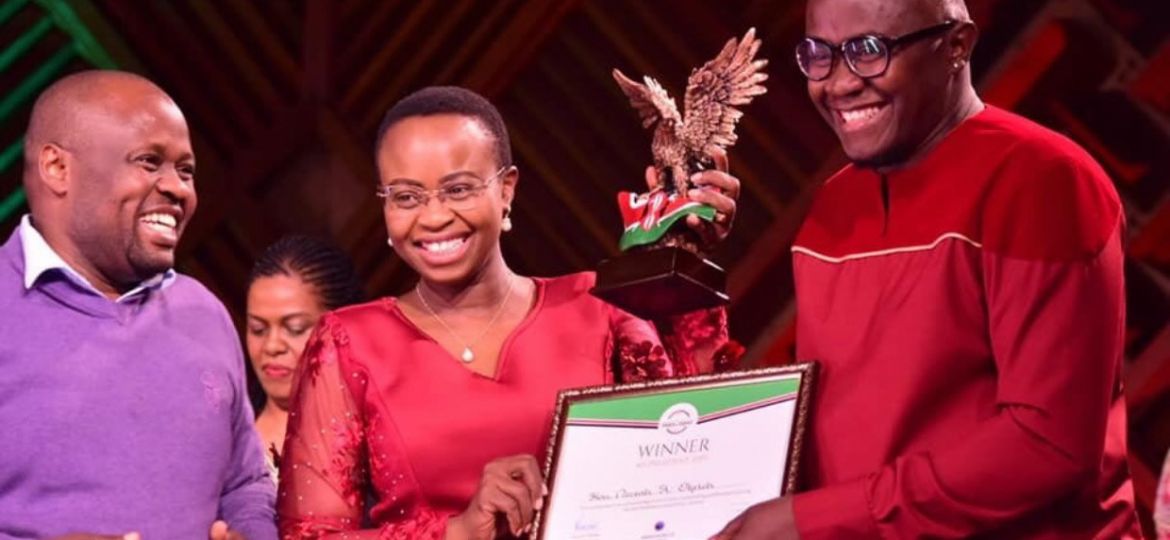
NEREAH OKETCH BECOMES KENYA’S FIRST MS PRESIDENT

Over 1000 contestants and 26 episodes later, Hon. Nereah Amondi Oketch, a nominated Member of County Assembly from Homa Bay County, was announced Kenya’s first female TV during Ms President Reality TV Show grand finale on 31st July 2019 at the Catholic University of Eastern Africa.

“I dedicate this to Kenyan voices. I carry in me their hopes and aspirations. Ms President nurtured and allowed me to carry those aspirations,” she said amidst tears of excitement.

She was trailed closely by Umulkheir Mohamed from Garissa County who was the first runners up, Hon. Irene Mayaka from Nyamira County, Betty Adera (Nairobi County) and Waruguru Kiai(Nyeri County), respectively.

A project funded by the European Union with additional support from the High Commission of Canada and Hivos East Africa, the show aimed at challenging stereotypes and growing support for women vying for leadership positions by changing the perceptions of women in leadership.

Through training and challenges, the top 5 candidates were able to continuously prove their capacity and ability to be leaders while competing for the prize of becoming Kenya’s first female president.

Media Focus on Africa’s Ms President has empowered women to become key players in preventing the spread of violent extremism and radicalization. It continues to strengthen the institutional and operational capacity of civil society actors and media practitioners to prevent violence against women and protect human rights.

    Umulkheir Mohamed, Ms President Reality TVShow second runner up

MS PRESIDENT FINALISTS DEBATE ON NATIONAL ISSUES

Yesterday, the five Ms President finalists made their final bids to woo viewers during the presidential debate, and demonstrated confidence, eloquence and wit.

They impressed judges and viewers with their grip of various social issues, including leadership, cultural diversity, involvement of women in violent extremism, labour rights, food security, technology and health.

The European Union (EU), which is the main sponsor of the show, said the programme demonstrated that women had huge potential in leadership.

According to Josephine Kalinauckas, the EU’s Head of Section in Delegation Foreign Policy Instruments in East and Southern Africa, all the contestants, including hundreds of those who did not make it to the final stages, had demonstrated that women had what it takes to articulate societal issues.

“It is a message to Kenyans that they should not overlook the role of women while seeking solutions to challenges. Problems cannot be fully tackled without involving everyone,” she said.

Kalinauckas said the contestants, shortlisted from 1,000 women who joined the contest at its early stages, had demonstrated that given a platform, they could articulate issues the society faces.

“The major lesson is that the solutions have to be tailored to the local context. Local women’s voices need to be heard in this process so that solutions are not imposed,” she said.

Kalinauckas said EU would work closely with Kenya to ensure issues facing the country are addressed with more focus on empowering women and youth. She said President Uhuru Kenyatta had made a positive signal by meeting the five finalists.

“We are delighted the President took interest. It is a demonstration that we have a secured democracy. It will be interesting to know what they discussed,” she said.

Last week, the President met the five contestants and invited them to the podium during the commissioning of the Bidco Industrial Park in Ruiru, before hosting them at State House Nairobi on July 25.

The winner will be announced from viewers’ votes through a free Short Messaging Service code.

After the announcement, the EU representative said she was hopeful the Ms President would start advocating more women involvement and participation in the country’s political spectrum.

“We will work with Media Focus on Africa to look at possible follow-up ideas,” she said.

DIVA4D slot gacor 777

social media

Social Media Feed

Updates from Uganda & Kenya

Facebook Kenya

Facebook Uganda

Twitter Kenya

Twitter Uganda